When we experience illness, grief, or other crises in life, it can be hard to find words for what we are going through. At the same time, we know that language shapes how we understand our experiences, ourselves, and the situation we are in.
Literature therapy rests on the idea that reading, writing, metaphor, and story can be valuable tools in the therapeutic process. They can help create clarity, add nuance to experience, and open new perspectives - not by removing what is difficult, but by making it possible to examine and relate to it in new ways.
Literature as a clinical tool
In my work I draw on therapeutic writing, reading, metaphor work, and narrative methods, among others. These methods are not an alternative to psychological treatment, but an integrated part of it, when they are relevant to the individual.
I find that a poem can create recognition, that a metaphor can put words to something that has until now been hard to describe, and that writing can help people gather thoughts and experiences that might otherwise feel fragmented.
Literature therapy is therefore not primarily a method for writing well or reading literature. It is a way of working with people’s experiences through language - grounded in psychological expertise, clinical experience, and evidence-informed methods.
In collaboration: Psychological Book Club - with Folkeuniversitetet, Aarhus
Since 2020 I have created and facilitated the Psychological Book Club at Folkeuniversitetet in Aarhus (FUAU) - now in its seventh year. Here literature and psychology meet around a selection of novels, short stories, and poems. Over the years I have also given a number of workshops and lectures at FUAU.
We explore what literature sets in motion in us, and how stories can open new perspectives on people, relationships, emotions, and what it means to be human. Along the way I draw on psychological knowledge and literature-therapeutic perspectives, and we move between short talks, shared dialogue, exercises, and group reflection.
Over the years the book club has grown into a place where my interest in literature, psychology, and people’s experiences can meet – and where we examine together what happens when we read with both a psychologist’s eye and a literary one.
The next book club starts in September 2026 →
In collaboration: Connected Worlds
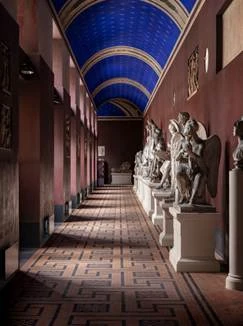
At Thorvaldsens Museum in Copenhagen I co-lead Forbundne verdener – Kunst, kognition og kreativitet (Connected Worlds - Art, Cognition and Creativity), a practice-oriented workshop that brings together psychology, neuroscience, and art. Developed with artist and psychologist Martha Kramær and museum curator Margrethe Floryan, it uses idea development, turning text into image, and shared reflection to strengthen creativity and collaboration in teams and organisations.
Read more and book at Thorvaldsens Museum →
In collaboration: Litteraturens øjne
Together with Martha Kramær – psychologist, MFA, and practising visual artist – I create workshops, folk high school stays, courses, and lectures where literature, art, and psychology meet. We are interested in how stories and visual expression can open new perspectives, invite reflection, and make room for creative exploration. Among other things, we have run a workshop at the LiteratureXchange festival in Aarhus. Follow our shared work and our ongoing literary deep dives at @litteraturensoejne →