
How do we live with painful life changes?
How do we find our footing when illness, grief, or other life crises change the life we knew? And how can we go on living a meaningful life in the midst of life’s changes?
These are questions that have followed me throughout my working life as a psychologist.
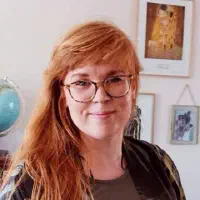
I am an authorised clinical psychologist and a specialist in health psychology. I work at Det Nationale Sorgcenter (the National Centre for Grief), where I meet children, young people, adults, and families living with serious illness, grief, and loss. I have previously worked with patients and their relatives at Aarhus University Hospital and Privathospitalet Mølholm.
Through my work I have met people whose lives have been changed by serious illness, chronic pain, grief, or other existential crises - situations in which the familiar is no longer a place to stand. I am deeply interested in how people, and those closest to them, can understand and live with the psychological, social, and existential changes that come with illness, crisis, and loss.
In meeting each individual, my focus is on creating a safe space where people can find footing, understanding, and meaning - even when life hurts.
Where I stand professionally
My professional foundation is health psychology, in which a person’s psychological, social, and existential life is understood as an integral part of living with illness, pain, grief, or other burdensome life circumstances.
I work from an evidence-based approach grounded especially in Acceptance and Commitment Therapy (ACT), existential therapy, and mindfulness-based methods (MBCT). What these approaches share is a focus on psychological flexibility - and on how people can live a rich and meaningful life, even in the face of life’s challenges.
To me, therapy is about creating a safe space where people can understand their reactions, find new perspectives, and rebuild a life with direction, hope, and quality of life.
Putting words to the incomprehensible
Alongside my clinical work, I have over many years developed a particular professional interest in the therapeutic possibilities of literature - especially writing therapy, metaphor work, and narrative interventions.
Again and again, I see how people find new perspectives when they are given the opportunity to write, read, explore metaphors, or tell their story in new ways. Not because the words take the pain away, but because they can create coherence and make what is difficult more understandable and less lonely.
I have seen how a well-chosen metaphor, a poem, a story, or a writing exercise can spark recognition, reflection, and new ways of understanding oneself.
I do not see literature therapy as an alternative to psychology, but as a clinical tool that - when used with professional care and ethical consideration - can support reflection, meaning-making, and new narratives about the life one now finds oneself in.
The person at the centre
Across all my positions, the same curiosity has been the common thread: how do we best support people when life changes fundamentally?
Whether I meet people in therapy, teach, or give talks, my aim is the same: to translate psychological knowledge into something that feels present, practical, and meaningful.
I regularly give talks and teach professionals, and I communicate about health psychology, illness, grief, and literature therapy through lectures, workshops, and written publications.
I believe that professional rigour and human warmth are not opposites. Quite the contrary. Both are needed when people are finding their way through illness, grief, and life crises.